Screened Porch & Lanai Cleaning on Hilton Head Island — Clearing Pollen, Mildew and Webbing
A gentle low-pressure rinse and wipe that clears pollen, mildew and webbing from screen enclosures and pool cages — without stretching the mesh.
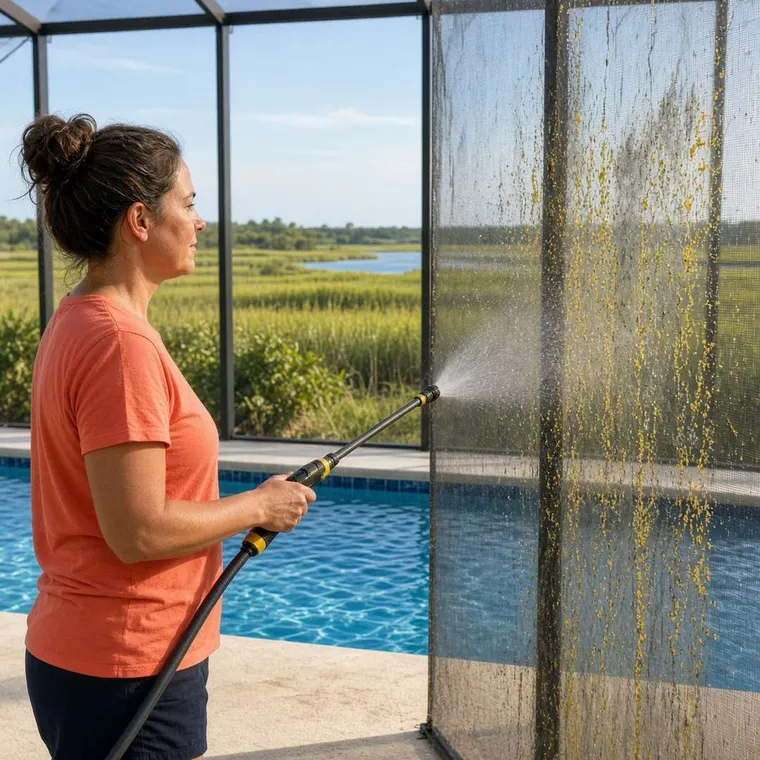
Screened porch and lanai cleaning on Hilton Head Island clears the pollen film, mildew and spider webbing that build up on screen enclosures and pool cages in the island's humid, shaded climate. Spring oak pollen coats island screens yellow, and the year-round humidity grows mildew on the frames and mesh. A low-pressure rinse and wipe clears the screens, frames and enclosure without stretching or tearing the mesh.
What Lanai and Screen Cleaning Covers
Lanai and screen cleaning on the island covers the screen mesh, the frame and kick plates, and the surrounding deck or pool surround of a screened porch or pool enclosure. On Hilton Head these enclosures are built for outdoor living in the heat, and they collect pollen, mildew, dust and webbing fast. A full cleaning rinses the mesh at low pressure, wipes down the frames, and clears the floor of the enclosure.
Screen mesh is delicate, so the method stays gentle. The actor is the rinse and the wipe, never high pressure that would blow out or stretch the screens.
How Lanai Cleaning Works
Lanai cleaning works at low pressure from start to finish. First, loose debris, leaves and webbing are cleared from the corners and tracks. Second, the screen mesh is rinsed with low pressure to lift pollen and mildew without stretching the panels. Third, the frames, kick plates and door are wiped or rinsed to clear the mildew that grows on the aluminum. Finally, the enclosure floor is rinsed clean so the whole space is usable again.
Low pressure throughout is what protects the screens. A pressure wand aimed at mesh will tear or pop the panels out of their spline, so a screened enclosure is always cleaned gently.
Why Hilton Head Lanais Get Dirty Fast
Hilton Head lanais get dirty fast because of pollen, humidity and tree cover. Each spring, the island's live oaks release a heavy yellow pollen that coats screen enclosures across neighborhoods like Palmetto Dunes, Sea Pines and Sun City Hilton Head. The rest of the year, the humidity grows mildew on screen frames and mesh, and the oak canopy drops leaves and feeds the spiders that web the corners.
A screened porch or pool cage is a major feature on an island home built around outdoor living, and letting it stay coated in pollen and mildew cuts off a room homeowners use much of the year. Regular cleaning keeps the enclosure usable through the long Lowcountry outdoor season.
Work is performed by independent professionals.
What to Look for in a Lanai Cleaning Pro on Hilton Head
A safe screen-enclosure cleaning on the island includes the following.
- Low pressure on the mesh, never a high-pressure wand that tears or pops screens.
- Frame and kick-plate cleaning, since mildew grows on the aluminum as much as the mesh.
- Corner and track clearing of leaves and webbing.
- A floor rinse so the whole enclosure is usable, not just the screens.
- Liability insurance verified before work.
With no South Carolina license specific to this work, insurance and a gentle, low-pressure method are what to confirm.
Areas Served
Screen and lanai cleaning covers enclosures across Hilton Head — Palmetto Dunes and Shipyard mid-island, Sea Pines and Long Cove on the south end, and Indigo Run on the north end — plus the pool cages and lanais common in Sun City Hilton Head, Bluffton and Okatie.
Frequently Asked Questions
Can you pressure wash a screened porch or pool cage?
No, screen enclosures are cleaned with low pressure, not a high-pressure wand. High pressure stretches, tears, or pops screen mesh out of its spline. Lanai cleaning on Hilton Head uses a low-pressure rinse to lift pollen and mildew off the mesh and frames gently, which clears the enclosure without damaging the delicate screens.
Why does my lanai get coated in yellow film every spring?
That yellow film is oak pollen, which Hilton Head's live oaks release heavily each spring. The pollen settles on screen enclosures across the island and clings to the mesh and frames. A low-pressure rinse clears the pollen without harming the screens, and a spring cleaning is the most common time Hilton Head homeowners have their lanais done.
Does screen cleaning include the frames and floor?
Yes. A full lanai cleaning covers the screen mesh, the aluminum frames and kick plates where mildew grows, and the enclosure floor. On Hilton Head the humidity grows mildew on the frames as much as the mesh, so cleaning only the screens leaves the enclosure half done. Clearing the frames and rinsing the floor makes the whole space usable again.
How often should a Hilton Head lanai be cleaned?
Most Hilton Head screen enclosures benefit from cleaning once or twice a year, with a spring cleaning after oak pollen season being the most important. The island's humidity grows mildew on frames and mesh year-round, and homes under heavy tree canopy collect leaves and webbing faster, so shaded lanais in neighborhoods like Sea Pines may need more frequent attention.
Will cleaning damage or stretch my screens?
No, when low pressure is used. Screen mesh is delicate, and a proper lanai cleaning on Hilton Head relies on a gentle low-pressure rinse and hand-wiping rather than force. That is exactly what avoids the stretching, tearing and popped panels that a high-pressure wand causes on screens, so the enclosure is cleaned safely.
Call Now for Lanai & Screen Cleaning on Hilton Head Island
Reach a local exterior-cleaning pro who matches the method to the surface across Hilton Head and the Lowcountry.