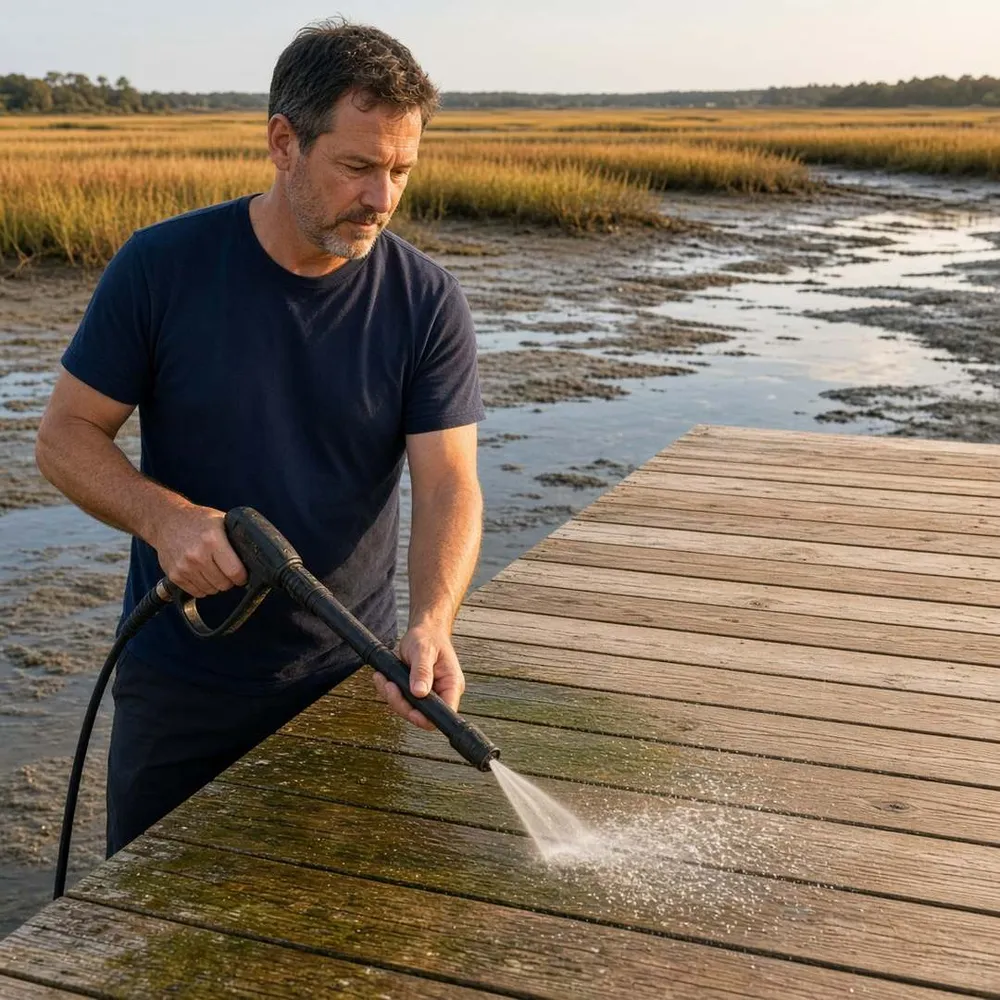
A private dock on a tidal creek is one of the best parts of living on Hilton Head — and one of the easiest things to let go green and slick. Marshfront wood takes a beating from the tides, humidity and shade, and keeping it clean is as much about safety as looks. Here's what happens to dock and deck boards on the salt marsh and how they're cleaned without damage.
Why Marshfront Wood Goes Slick
Dock boards on Hilton Head's creeks — Broad Creek, Skull Creek and the island's marsh edges — sit in near-constant moisture. Tidal spray, humidity and shade keep the wood damp, and damp wood grows a film of algae, especially at and below the tide line where the boards stay wettest. That algae is what makes a dock dangerously slick underfoot. Backyard decks have the same problem in the shade of the island's oak canopy, just without the tide.
The Danger Is the Slip, Not the Stain
On a deck, green growth is mostly a looks problem. On a dock, it's a safety one. A slick dock board is a real hazard where people walk out to a boat, carry a kayak, or let kids run to the water. The algae builds up gradually, so homeowners often don't notice how slick it's gotten until someone goes down. That's the main reason marshfront docks shouldn't be left to grow — a proper dock cleaning restores the grip.
Why High Pressure Is the Wrong Tool
The instinct is to blast a slick dock with a pressure washer, but high pressure is the wrong tool for marshfront wood. Dock boards, especially older ones that have weathered in the salt air, are soft, and high pressure raises the grain, furs the surface, and gouges the wood. That leaves the boards rougher, more porous, and quicker to grow algae again. The right approach is a cleaning solution to kill the growth plus a controlled low-pressure wash that lifts it without tearing up the wood.
Cleaning as Prep for Sealing
If you're planning to seal or stain a dock or deck — a smart move in the Lowcountry's harsh conditions — cleaning comes first. A stain or sealer can't bond to wood that's coated in algae, mildew and gray weathering. A proper cleaning strips all of that and, once the wood dries, leaves a surface the finish can actually grip. Skipping the cleaning is why a lot of DIY sealing jobs on the island peel within a season.
Keeping It Up
Marshfront docks grow algae back fast in the island's humidity, so plan on cleaning at least yearly, more for docks on the shadier creeks. Between cleanings, keeping the boards clear of leaves and debris helps, since matted debris traps the moisture algae needs. If your dock or deck is getting slick on Hilton Head, call 123-456-7890 to reach a local pro who cleans marshfront wood the right way.
Work is performed by independent professionals.